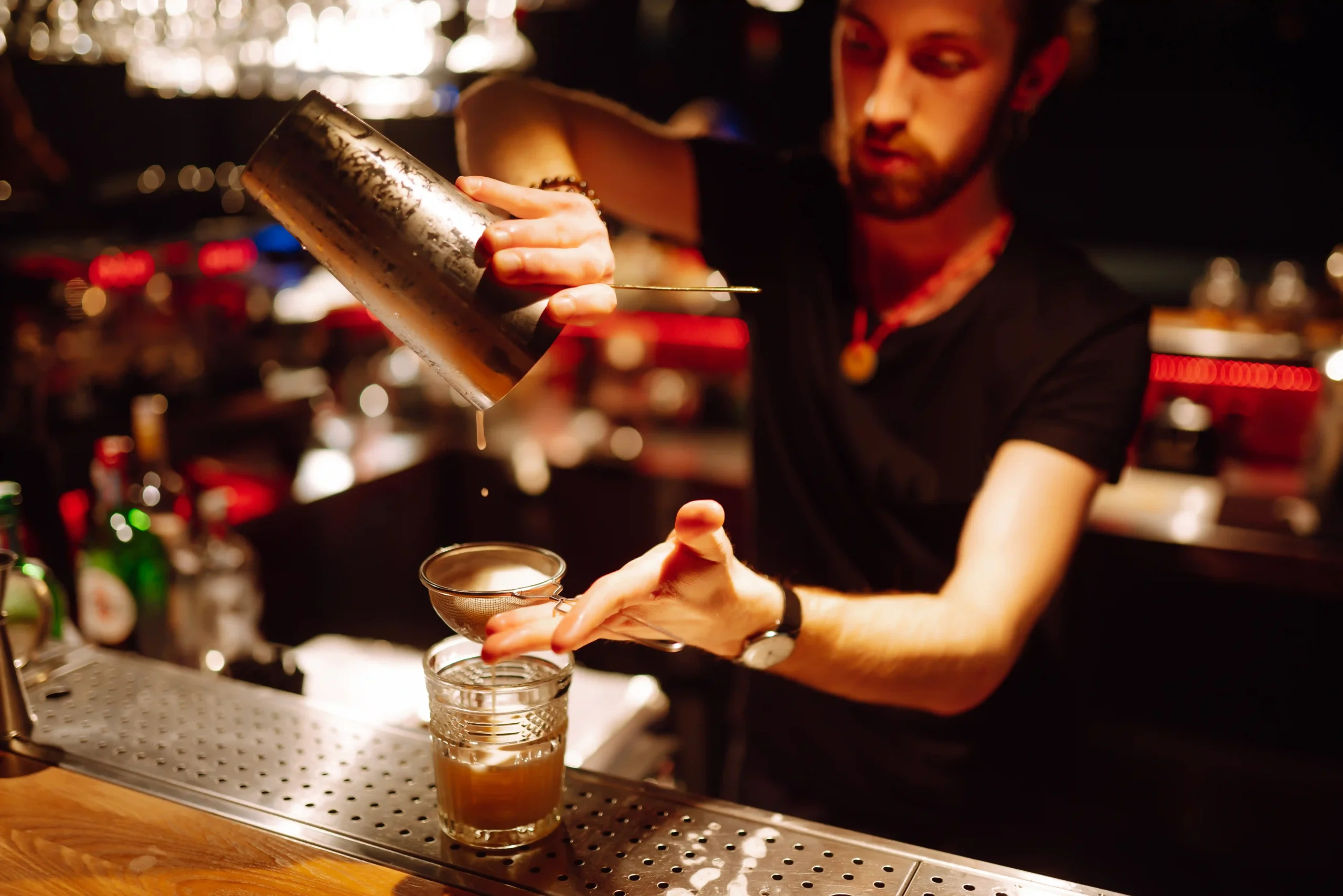
Florida Bartender Minimum Wage: What Bartenders Should Know
Florida’s minimum wage is rising to $15 per hour, bringing the minimum direct wage for many tipped bartenders to $11.98 plus tips.
- Home
- admin
If you’re thinking about becoming a bartender in Florida, you may see a number like $11.98 an hour and wonder whether that is really what bartenders make.
Not exactly.
Florida’s minimum wage increases to $15 per hour on September 30, 2026. For many eligible tipped workers, including bartenders, the minimum hourly wage paid directly by the employer becomes $11.98 per hour, plus tips, when the employer uses Florida’s full tip credit.
That $11.98 figure is important, but it is only one part of the picture. Bartenders also earn tips, and depending on the shift, venue and amount of business, tips can become a much larger part of what a bartender takes home.
For someone considering bartending as a career, the better question is not simply, “What is the hourly wage?” It is, “What can a real bartending shift look like?”
What Can a Bartending Shift Actually Look Like?
The examples below all use Florida’s $11.98 minimum tipped wage as the starting point.
A quieter six-hour shift might look like this: the bartender earns $71.88 in base wages and brings in another $100 in tips. That puts the total for the shift at $171.88, or about $28.64 per hour before taxes.
Now compare that with a busier Friday night. An eight-hour shift at the same base wage produces $95.84 in hourly pay. If the bartender earns $220 in tips, the total for that shift becomes $315.84, or about $39.48 per hour before taxes.
Private events can look different again. A bartender working alone at a seven-hour event would earn $83.86 in base wages at the $11.98 rate. If that bartender also earns $300 in tips, the total for the event comes to $383.86, which works out to about $54.84 per hour before taxes.
This is why looking only at the base hourly wage can give a very incomplete picture of bartending income. The hourly rate matters, but the type of shift, number of guests, venue, amount of business and tips earned can all change the outcome considerably.
What If Bartenders Share Tips?
Tip sharing can also change what a shift looks like.
Suppose two bartenders work an eight-hour event and the bar brings in $400 in tips. If the tips are split evenly, each bartender receives $200 in tips.
At $11.98 per hour, each bartender also earns $95.84 in base wages, bringing the total to $295.84 for the shift.
That is why it is useful to understand how a bar or event handles tips before you start working. Some bartenders keep their own tips, while others work in tip pools or share tips with other bartenders, servers or barbacks.
So What Does the $11.98 Rate Actually Mean?
Florida allows employers to count up to $3.02 per hour in tips toward the state’s $15 minimum wage for eligible tipped workers.
That leaves $11.98 per hour as the minimum amount the employer pays directly when using the full tip credit.
Put simply:
$15.00 minimum wage – $3.02 tip credit = $11.98 minimum direct wage
The important thing for future bartenders to understand is that $11.98 is a legal wage floor. It is not a statement of what bartenders generally earn.
For many bartenders, the base wage is only one part of the total compensation.
Why Some Bartending Shifts Pay Better Than Others
Anyone who has worked in hospitality knows that every shift is different.
A Tuesday lunch shift is not the same as Saturday night. A neighborhood restaurant is not the same as a packed nightclub. A five-hour wedding can be completely different from a slow hotel lounge shift.
A bartender’s earnings can be affected by the number of guests, drink prices, how busy the bar is, the type of establishment and how tips are divided.
Your own skills matter too.
A bartender who can work quickly, stay organized, recommend drinks, communicate well with guests and handle pressure is more valuable behind the bar. Those skills can lead to better shifts, better opportunities and more earning potential over time.
That is one of the reasons bartending education should go beyond memorizing drink recipes. Knowing how to make a cocktail is important, but understanding how to work a real bar is what makes someone useful to an employer.
Why the Minimum-Wage Increase Still Matters
Even when tips make up a large part of a bartender’s income, the base wage still matters.
A bartender working 30 hours per week at the new minimum tipped rate earns $359.40 in base wages before tips.
At the previous $10.98 rate, those same 30 hours produced $329.40.
That is an extra $30 per week in base pay.
Over a year of similar schedules, that difference adds up to about $1,560 in additional base wages.
So while tips may be the more exciting part of bartending income, the hourly wage is still money in the paycheck and worth paying attention to.
Tips, Tip Pools and Service Charges
New bartenders will quickly hear terms such as tips, tip sharing, tip pools, gratuities and service charges. They may sound similar, but they are not always handled the same way.
A voluntary tip left by a guest is different from a mandatory service charge automatically added to a bill. Tip pools can also mean that the money collected during a shift is divided among several employees.
Before starting a job, it is perfectly normal to ask how tips are handled. Bartenders should know whether they keep their own tips, share with other employees, participate in a tip pool or receive part of a service charge.
It is also worth asking how credit-card tips are paid and whether bartenders are expected to share with servers, barbacks or other staff.
Understanding those details is simply part of understanding how you get paid.
What About Managers and Tip Pools?
Federal rules generally do not allow employers, managers or supervisors to keep employee tips or receive distributions from a traditional employee tip pool.
For bartenders, the practical takeaway is simple: know how the tip pool works and who participates in it.
If several people are sharing the tips from a shift, you should understand how that money is being divided.
What About Overtime?
Hospitality schedules can change quickly. A bartender may pick up another shift, cover a call-out or work a double and end up going over 40 hours in a workweek.
Covered nonexempt employees generally must receive overtime compensation for hours worked over 40 under federal law.
For tipped workers, overtime is more complicated than simply multiplying the reduced tipped wage by 1.5 because the tip credit has to be handled correctly as part of the calculation.
If you are regularly working long weeks, it is worth looking closely at your pay statement and understanding how overtime is being calculated.
Get Into the Habit of Reading Your Pay Stub
One of the simplest habits a new bartender can develop is learning to read a paycheck.
Many hospitality employees pay close attention to what they made in tips during a shift but rarely examine the details of the payroll statement.
Both matter.
A bartender should be able to identify the hourly rate, hours worked, overtime, reported tips, tip-pool deductions or distributions, service-charge payments, taxes and other deductions.
If you are being paid Florida’s minimum tipped wage, the new $11.98 hourly rate is one more reason to look at the first paycheck covering hours worked under the new wage.
Bartending Is More Than an Hourly Wage
One of the most common questions from people considering bartending is, “How much do bartenders make?”
There is no single answer.
Bartenders work in restaurants, hotels, resorts, nightclubs, weddings, sporting events, festivals, corporate events and private parties. Some work one steady job. Others pick up events on the side. Some eventually move into management, spirits education, liquor-brand work or start their own mobile bartending businesses.
That is why looking only at the minimum hourly wage can give someone the wrong impression of the profession. The base wage matters, but the type of establishment, the shifts you work, your experience, your speed, your service skills and the opportunities you pursue can make a much bigger difference over time.
At 786-Bartend, we want students to understand the whole profession, not just memorize drink recipes. That means learning how to work behind a real bar, handle guests, build speed, understand spirits, work efficiently and know what employers expect when they put you on a shift.
Understanding how you get paid is part of that education too.
If you are thinking about becoming a bartender, learn more than the drinks. Learn how the industry actually works.
View upcoming 786-Bartend course schedules and learn bartending the right way.
Official Sources
- Florida Constitution, Article X, Section 24
- Florida Department of Commerce, Florida Minimum Wage information and required notices
- Florida Statutes Sections 448.109 and 448.110
- U.S. Department of Labor Wage and Hour Division, Fact Sheet #15: Tipped Employees Under the Fair Labor Standards Act