


Florida has long been one of the country’s major hospitality states, but the economics of bartending here have become particularly interesting.
Florida’s statewide minimum wage reaches $15 per hour on September 30, 2026. For eligible tipped employees, including many bartenders, the minimum amount paid directly by the employer becomes $11.98 per hour, plus tips, when the employer uses Florida’s full $3.02 tip credit.
At 40 hours a week, $11.98 per hour represents $479.20 in weekly base wages, about $2,077 per month, and approximately $24,918 per year before adding any gratuities.
For a profession that has historically been associated in parts of the country with tipped cash wages of only a few dollars per hour, that gives Florida bartenders a comparatively strong base underneath their tips.
But hourly pay tells only part of the story.
What makes Florida particularly interesting for bartenders is the combination of that wage floor with something every bartender needs if he or she expects to make money behind the bar: customers and sales volume.
South Florida has plenty of both.
Florida does not have the highest tipped wage in the country, but its base rate is still considerably stronger than the federal tipped cash wage used in many states.
States such as California and Washington require employers to pay tipped workers the full applicable minimum wage before tips, while several other states also maintain tipped cash wages above Florida’s rate.
Florida does, however, sit far above the $2.13 federal tipped cash wage that can still apply to eligible tipped employees in states that have not established a higher requirement.
For bartenders comparing different markets, that difference matters. A stronger guaranteed base wage means more money coming directly from the employer before the bartender’s tips are added.
Base wages are only part of the picture. Experienced bartenders often pay much closer attention to sales.
“Throughout my career, I’ve never evaluated a bartending job solely by its hourly wage. I want to know what kind of business moves through the establishment, but I also want to see the menu and understand the food and beverage program. What are the cocktails selling for? What does the average guest spend? Are people eating at the bar? What kind of spirits and wine are being offered? Those things begin to tell you what the opportunity really looks like.”
For an experienced bartender, reviewing a prospective job can mean looking at the menu almost as closely as looking at the hourly wage. A strong food and beverage program creates more opportunities during every interaction. A guest who sits down for a cocktail may stay for dinner. Someone ordering dinner may have wine, another cocktail, dessert or an after-dinner drink. A well-designed spirits program also gives the bartender more opportunities to make knowledgeable recommendations and introduce guests to products they may genuinely enjoy.
That is why menu prices and sales mix matter. A bar selling $16 cocktails, quality wines and a strong dinner menu creates a different opportunity from an operation where most transactions are inexpensive drinks with little food business. Neither model is automatically better, but an experienced bartender learns to look at the entire operation before deciding what a position may be worth.
Customer volume still matters, but so does what the establishment gives the bartender to work with. Average checks, beverage prices, food sales, menu design, the quality of the cocktail program, the wine and spirits selection, and the amount of business a bartender personally handles during a shift can all influence the opportunity behind the bar.
That is one of the unusual things about bartending compared with many hourly jobs. The wage establishes the floor. The food and beverage program, the customers and the business moving across the bar help determine what happens above it.
And that is where Florida, particularly South Florida, becomes interesting.

Florida welcomed a record 143.33 million visitors in 2025. During the first three months of 2026 alone, another 39.88 million visitors came to the state.
For hospitality workers, those are not simply tourism statistics.
Visitors stay in hotels and resorts, dine in restaurants, order drinks, attend weddings and conventions, visit nightclubs, board cruise ships, go to concerts and sporting events, celebrate holidays and book private functions. Their spending moves through an enormous range of businesses that employ bartenders.
Tourism effectively puts another population on top of Florida’s permanent population.
South Florida then adds another significant advantage: density.
The U.S. Census Bureau’s 2025 estimates place Miami-Dade County at approximately 2.80 million residents, Broward County at 2.01 million, and Palm Beach County at 1.58 million. Together, the three counties account for roughly 6.39 million permanent residents.
Those residents are not spread across the entire state. They are concentrated along a connected South Florida corridor.
From Miami and Miami Beach through Hollywood and Fort Lauderdale, north into Boca Raton, Delray Beach, Palm Beach and West Palm Beach, bartenders have access to multiple hospitality markets without having to relocate hundreds of miles to find another opportunity.
That matters.
A bartender here is not relying entirely on one resort, one entertainment district or one seasonal attraction. There is a large local population supporting the market before the first tourist even arrives.
One of South Florida’s strengths is the number of different ways someone can work behind a bar.
The bartender working a neighborhood restaurant is operating in a very different environment from the bartender at an oceanfront luxury hotel. A nightclub has different demands from a country club. A banquet department runs differently from a sports bar. Private event bartending is different again.
Yet all of those opportunities exist within the same region.
Bartenders can work in neighborhood restaurants, upscale dining rooms, luxury hotels, resorts, sports bars, nightclubs, lounges, country clubs, casinos, banquet operations and waterfront establishments. Outside the traditional bar setting, opportunities also exist at weddings, corporate events, concerts, festivals, stadiums, trade shows, private parties, holiday events, yachts and mobile bartending services.
That variety makes bartending unusually flexible.
For some people it becomes a full-time career. Others use bartending as additional income on evenings, weekends or holidays. Some eventually move into bar management, beverage operations, events, spirits education or their own mobile bartending business.
That career flexibility is one of the reasons we’ve previously described bartending as one of the strongest vocational trades to learn.
The skill can travel with the bartender even when the venue changes.

Discussions about bartenders’ income often start with hourly wages or average annual salaries.
Those numbers have value, but they do not necessarily describe what happens during an actual shift.
Experienced bartenders tend to look at the business differently.
They watch the register.
Consider a fairly ordinary restaurant scenario in today’s market. Two guests sit at a bar, have drinks and dinner, and their check approaches $100. At an 18% gratuity, that represents $18 in gross tips, or roughly $9 per guest.
Now look at those numbers from behind the bar rather than from the dining room.
How many seats does the bar have? How many times will those seats turn during a shift? Is the bartender serving food in addition to beverages? What is the average cocktail price? What does the average guest spend?
Those questions begin to explain the economics of the position.
| Personal Sales During Shift | Gross Gratuity at 18% |
|---|---|
| $1,200 | $216 |
| $1,500 | $270 |
| $2,000 | $360 |
| $2,500 | $450 |
| $3,000 | $540 |
| $4,000 | $720 |
These examples show how quickly sales volume can change the economics of a bartending shift. What a bartender actually takes home will depend on how tips are handled at that establishment, but the basic relationship is easy to see: more business in front of the bartender creates more opportunity.
But the table illustrates why sales volume matters.
A neighborhood bar might reach $2,000 in bartender sales through greater guest volume and comparatively inexpensive drinks. A luxury hotel or high-end restaurant might reach the same sales figure with fewer transactions because cocktails can sell for $20, $25, $30 or more, with food and wine increasing check averages even further.
Different operations get there differently.
For the bartender, the underlying principle is the same: there has to be business in front of you.
South Florida provides an extraordinary amount of it.
There is another side to the equation that is rarely captured in wage reports.
Putting two bartenders behind the same bar does not necessarily mean they will produce the same sales or earn the same amount.
Both may have access to the same menu, the same seats, the same prices and the same customers. One may simply know how to work the opportunity more effectively.
That knowledge develops with experience.
Professional salesmanship behind a bar is not about pressuring people into ordering things they do not want. In fact, aggressive upselling can damage hospitality.
The better approach is much more subtle.
It can be the way a bartender starts a conversation, how a cocktail is described, whether a recommendation matches what the guest actually wants, when another round is offered, how food and beverage choices are paired, or whether the bartender recognizes an opportunity to introduce something the guest might genuinely enjoy.
Those seemingly small moments can increase units sold, average checks and total sales while still improving the guest’s experience.
Over time, experienced bartenders begin to recognize opportunities that newer bartenders often miss. They learn when to make a recommendation and when to leave the guest alone. They learn how to introduce premium choices without turning the interaction into a sales pitch. They learn how to increase a check while making the customer feel better served, not sold to.
They also become better at managing volume. A bartender who can serve more guests efficiently without sacrificing hospitality creates more opportunity simply by being able to handle more business.
This is one of the distinctions between teaching somebody to make cocktails and training somebody to work professionally behind a bar.
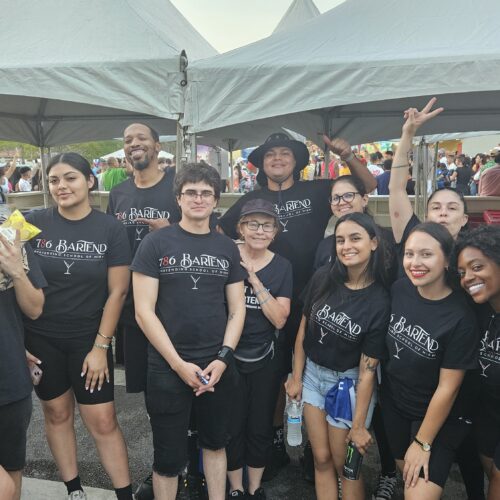
At 786-Bartend, students are taught to understand the business taking place around them, not merely memorize recipes. That includes guest engagement, sales awareness, operational efficiency and recognizing appropriate opportunities to increase the value of the business already in front of them.
Those skills become especially valuable in a market like South Florida, where the raw opportunity is already substantial.
South Florida can supply the people, the menu prices, the tourism, the events and the high-volume establishments.
It cannot make every bartender equally successful.
A bartender still has to know how to handle a station, control inventory, move efficiently, communicate with a team, understand spirits and cocktails, interact with guests and make sound decisions when the bar becomes busy.
And there is another level beyond simply keeping up.
An experienced professional learns to recognize ways to generate more from the business already in front of them.
That is a very different concept from waiting for the establishment to determine how much you earn.
Thirty-three years behind the bar produces lessons that rarely appear in cocktail books. They come from working thousands of shifts, serving different kinds of guests, operating in different environments and seeing which approaches consistently produce results.
Those lessons are part of what 786-Bartend brings into its State-Licensed Bartending Course.
The objective is not simply for students to know how to make a drink.
It is for them to understand what they are doing once they step into a real business.

Florida also has no personal state income tax, which adds another consideration for bartenders comparing different markets.
Beginning with the 2025 tax year, eligible workers in qualifying tipped occupations may also be able to deduct up to $25,000 in qualified tip income from federal taxable income. Bartenders are included among the occupations recognized by the IRS as customarily and regularly receiving tips.
We cover that subject in more detail in our article, What the No Tax on Tips Act Could Mean for Bartenders and Why It Matters.
For bartenders looking at Florida as a place to work, the bigger picture is what matters.
Florida now combines an $11.98 minimum direct wage for many eligible tipped bartenders, no personal state income tax, one of the largest tourism economies in the country, and a federal tax deduction that may benefit qualifying tipped workers.
Then add South Florida’s restaurants, hotels, resorts, nightlife, weddings, private events, festivals and year-round hospitality business.
That is a lot working in the bartender’s favor.
There are strong bartending markets all over the country. Las Vegas has casinos and enormous hospitality operations. New York has restaurants and hotels doing tremendous volume. California and Hawaii have major tourism markets and, in some cases, higher direct wages for tipped employees.
But bartending is not simply a contest to find the state with the highest hourly wage.
What matters is whether there is enough business around you to create opportunity.
Florida, and South Florida in particular, checks a lot of those boxes.
The Miami-Dade, Broward and Palm Beach area alone gives bartenders access to millions of residents, international tourism, major hotels, luxury resorts, nightlife, restaurants, cruise traffic, sporting events, weddings, corporate events and private parties.
A bartender does not need to work all of those markets.
The value is having them within reach.
I am Isaac Ergas, Director of 786-Bartend, and I have spent more than 33 years working behind bars and throughout the South Florida hospitality industry.
I have worked through very different versions of this market.
When I started, tipped wages were only a few dollars per hour. Cocktail culture was different. Technology behind the bar was different. Menu prices were different. Miami and Fort Lauderdale were very different hospitality cities from what they are today.
But one thing has remained consistent.
There has always been business.
That matters because bartending is an occupation where business creates opportunity.
A bartender with a full bar, a strong food and beverage program, good menu pricing and steady customer volume has something to work with. The next question is whether that bartender has the skills to take advantage of it.
Can you handle the volume? Can you manage your station? Can you communicate with guests? Can you recommend a spirit or cocktail confidently? Can you recognize when someone might want another round, dinner, wine or an after-dinner drink? Can you move quickly without sacrificing service?
Those are the things that begin separating someone who knows how to make drinks from someone who knows how to work professionally behind a bar.
That perspective comes from working thousands of shifts and watching the industry change around me for more than three decades.
It is also a big part of how we train students at 786-Bartend.
Someone considering entering the industry can learn more about what the profession looks like in our guide to bartending in Miami and Florida, including what to expect when beginning a bartending career.
For those ready to train, 786-Bartend goes well beyond memorizing recipes. Students learn hands-on bartending, spirits and beverage knowledge, speed, service, bar operations, guest interaction and the professional habits needed to work in a real hospitality environment.
We also teach students to look at the business around them.
Look at the menu.
Look at the food and beverage program.
Look at the prices.
Look at the volume.
Look at the clientele.
Look at the opportunities.
Because South Florida already provides the restaurants, hotels, events, tourism, menu prices and hospitality activity.
Training does not create that market.
The market is already here.
The goal is to become the kind of bartender who knows what to do with it.


786-227-8363
Monday to Friday: 8 AM - 10 PM; Saturday and Sunday: 9 AM - 8 PM.
Miami Lakes, Miami
Signup our newsletter to get update information, insight or news.